TARANGIRE NATIONAL PARK

Walk among ancient baobabs and witness magnificent elephants in one of Tanzania’s most captivating wildernesses.

Tarangire Overview

Tarangire National Park is one of Tanzania’s most diverse and rewarding wildlife destinations. Located in the northern part of the country, the park is renowned for its large elephant herds, iconic baobab trees, rich birdlife, and the life giving Tarangire River that attracts thousands of animals during the dry season. Although often overshadowed by Serengeti National Park and the Ngorongoro Conservation Area, Tarangire offers exceptional game viewing with fewer crowds, making it a favorite destination for nature lovers and photographers.

Established in 1970, Tarangire National Park covers approximately 2,850 square kilometers (1,100 square miles) and forms an important part of Tanzania’s Northern Safari Circuit alongside Lake Manyara National Park, Ngorongoro Conservation Area, and Serengeti National Park. Its unique landscapes, seasonal wildlife migrations, and peaceful atmosphere make it one of East Africa’s finest safari destinations.

Location and Geography


Tarangire National Park is situated about 120 kilometers (75 miles) southwest of Arusha, making it one of the most accessible national parks in northern Tanzania. The drive from Arusha takes approximately two to three hours, allowing visitors to easily include the park in multi day safari itineraries.

The park is named after the Tarangire River, which flows through its center and serves as the primary source of water for wildlife during the dry season. As surrounding water sources dry up, thousands of animals migrate into the park, creating one of the highest concentrations of wildlife in Tanzania outside the Serengeti ecosystem.

The landscape consists of gently rolling hills, open grasslands, river valleys, seasonal swamps, acacia woodlands, rocky ridges, and scattered baobab trees that dominate the skyline.

The Famous Baobab Trees

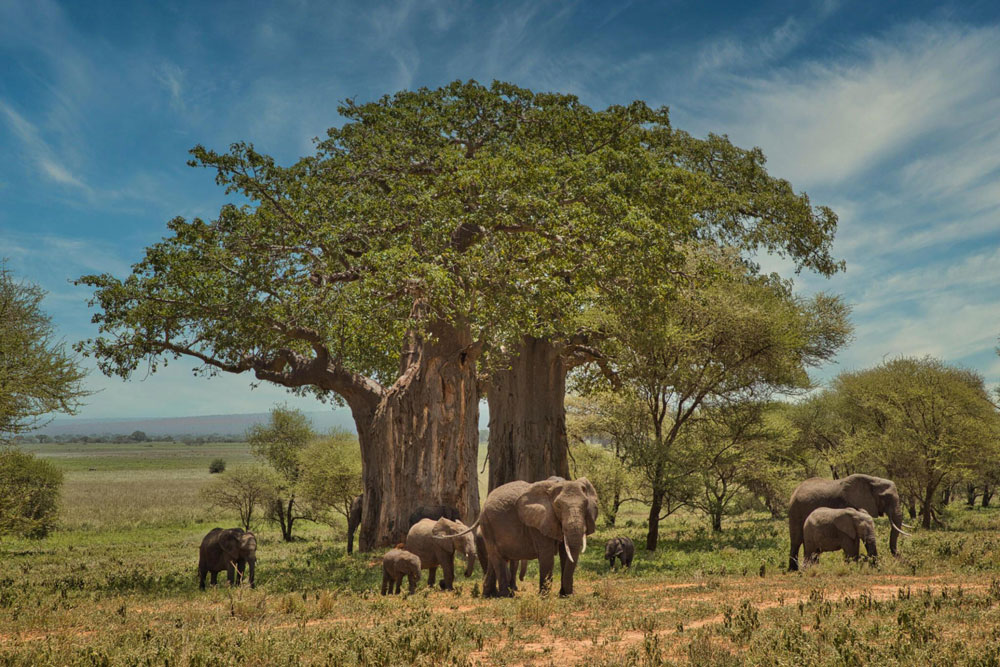
Tarangire is especially famous for its magnificent African baobab trees, some of which are believed to be hundreds or even thousands of years old. Their enormous trunks store large quantities of water, allowing them to survive long dry seasons.

Baobabs provide food and shelter for numerous animals, birds, insects, and reptiles. Elephants often strip their bark for moisture during periods of drought, while birds nest in natural cavities within the trunks.


These ancient trees have become one of the park’s most recognizable features and create spectacular photographic landscapes.
Wildlife found in Tarangire National Park

Tarangire National Park supports one of the richest wildlife populations in northern Tanzania, particularly during the dry season.

The park is internationally known for its large elephant population. Herds numbering more than 100 individuals are frequently seen gathering around the Tarangire River.

Visitors may encounter the famous Big Five, although black rhinoceroses are rarely found within the park today.

Common mammals include:

  • African elephants
  • Lions
  • Leopards
  • African buffaloes
  • Cheetahs
  • Spotted hyenas
  • Giraffes
  • Plains zebras
  • Wildebeest
  • Elands
  • Waterbucks
  • Impalas
  • Grant’s gazelles
  • Thomson’s gazelles
  • Dik-diks

Seasonal Wildlife Migration

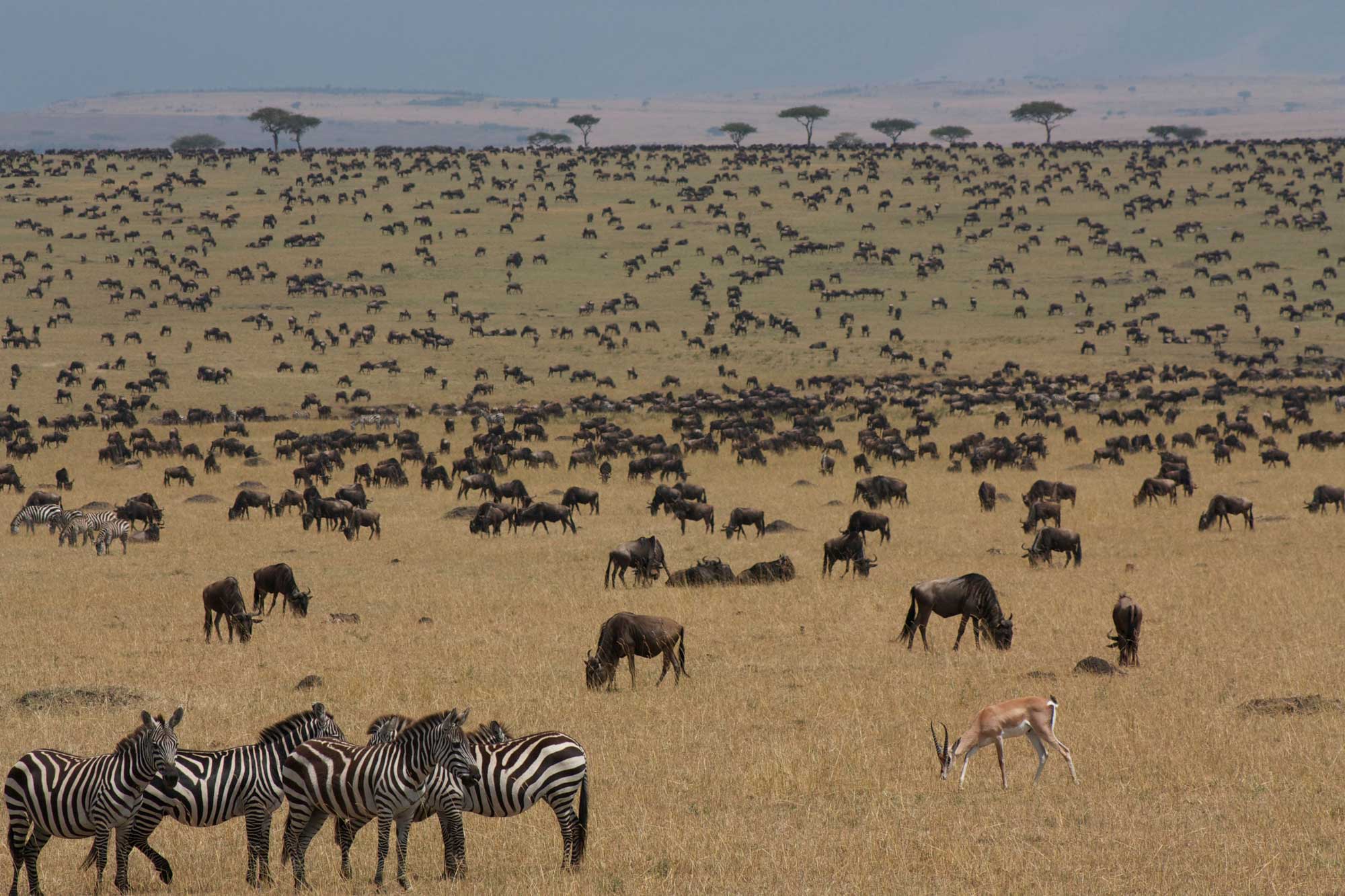
Although the Serengeti is famous for the Great Migration, Tarangire also experiences an important seasonal wildlife migration.

During the wet season, many animals disperse across surrounding conservation areas in search of fresh grazing. As water becomes scarce during the dry season, wildlife gradually returns to Tarangire, where the permanent river provides reliable water.

Large herds of elephants, zebras, wildebeest, buffaloes, antelopes, and predators concentrate within the park, creating exceptional wildlife viewing opportunities.

Best Time to Visit

Tarangire National Park offers rewarding safari experiences throughout the year.

  • June to October: Peak wildlife viewing as animals gather around the Tarangire River.
  • November to February: Green landscapes, newborn animals, and excellent birdwatching.
  • March to May: Beautiful scenery with fewer visitors, though some roads may become muddy during heavy rains.

The dry season is generally considered the best time for first-time visitors because wildlife is easier to locate.

Climate

Tarangire has a tropical savannah climate characterized by distinct wet and dry seasons.

Weather generally includes:

  • Dry season from June to October.
  • Long rains between March and May.
  • Short rains during November and December.
  • Warm temperatures throughout the year.
  • Cooler mornings and evenings during the dry season.

Wildlife viewing is generally excellent year-round, although animal concentrations are highest during the dry season.

Safari Activities in Tarangire National Park

isitors can enjoy a wide range of activities, including:

  • Morning and afternoon game drives
  • Full day wildlife safaris
  • Birdwatching tours
  • Wildlife photography
  • Guided walking safaris in designated areas
  • Cultural visits to nearby Maasai communities
  • Sundowner experiences
  • Educational nature tours

Experienced guides help visitors understand wildlife behavior, ecology, and conservation throughout the safari.

How to Reach Tarangire National Park

Tarangire National Park is easily accessible by both road and air.

By Road

Most visitors travel from Arusha, reaching the park in approximately two to three hours via well-maintained roads. Many safari itineraries begin in Tarangire before continuing to Lake Manyara, Ngorongoro, and Serengeti.

By Air

Charter and scheduled flights operate between Arusha and nearby airstrips serving Tarangire National Park. Flying is convenient for visitors with limited travel time or those combining several safari destinations.

Interesting Facts

  • Tarangire National Park was established in 1970.
  • The park covers approximately 2,850 square kilometers.
  • It is named after the Tarangire River.
  • Tarangire is famous for its massive elephant herds.
  • More than 550 bird species have been recorded.
  • The park contains some of Africa’s oldest baobab trees.
  • It supports important seasonal wildlife migrations.
  • Greater kudus and fringe-eared oryx are among its unique species.
  • The park is one of Tanzania’s top birdwatching destinations.
  • Tarangire forms part of the country’s renowned Northern Safari Circuit.

Conservation Importance

Tarangire National Park plays an essential role in protecting northern Tanzania’s ecosystems and seasonal wildlife migration routes.

Conservation programs focus on:

  • Wildlife habitat protection
  • Elephant conservation
  • Anti-poaching patrols
  • Scientific research
  • Bird monitoring
  • Community conservation partnerships
  • Sustainable tourism
  • Environmental education

Maintaining wildlife corridors beyond the park is particularly important because many animals migrate seasonally between protected and community-managed lands.

Start Planning Your Dream Trip with Us!

Booking form

Everything You Need to Know About Your Safari

Planning Your Safari? Find Your Answers Here

Start Planning Your Dream Trip with Us!

What is Tarangire National Park famous for?

Tarangire National Park is best known for its large elephant herds, ancient baobab trees, diverse wildlife, and the Tarangire River. During the dry season, many animals gather around the river, creating excellent opportunities for wildlife viewing.

Tarangire National Park is located in northern Tanzania, approximately 120 kilometers southwest of Arusha. It forms part of the Northern Safari Circuit and is commonly combined with Lake Manyara, Ngorongoro Conservation Area, and Serengeti National Park.

Visitors can see elephants, lions, leopards, buffaloes, giraffes, zebras, wildebeest, cheetahs, hyenas, impalas, gazelles, warthogs, elands, kudus, and many other species. Tarangire is also known for unusual species such as fringe-eared oryx and greater kudu.

The best time for wildlife viewing is generally June to October, when the dry season causes animals to concentrate around the Tarangire River and other permanent water sources. November to February is also rewarding for green scenery, newborn animals, and birdwatching.

A 1 to 2 day safari can provide a good introduction to Tarangire National Park. Travelers with more time can spend two or three nights exploring different parts of the park and enjoying longer game drives, birdwatching, and other activities.