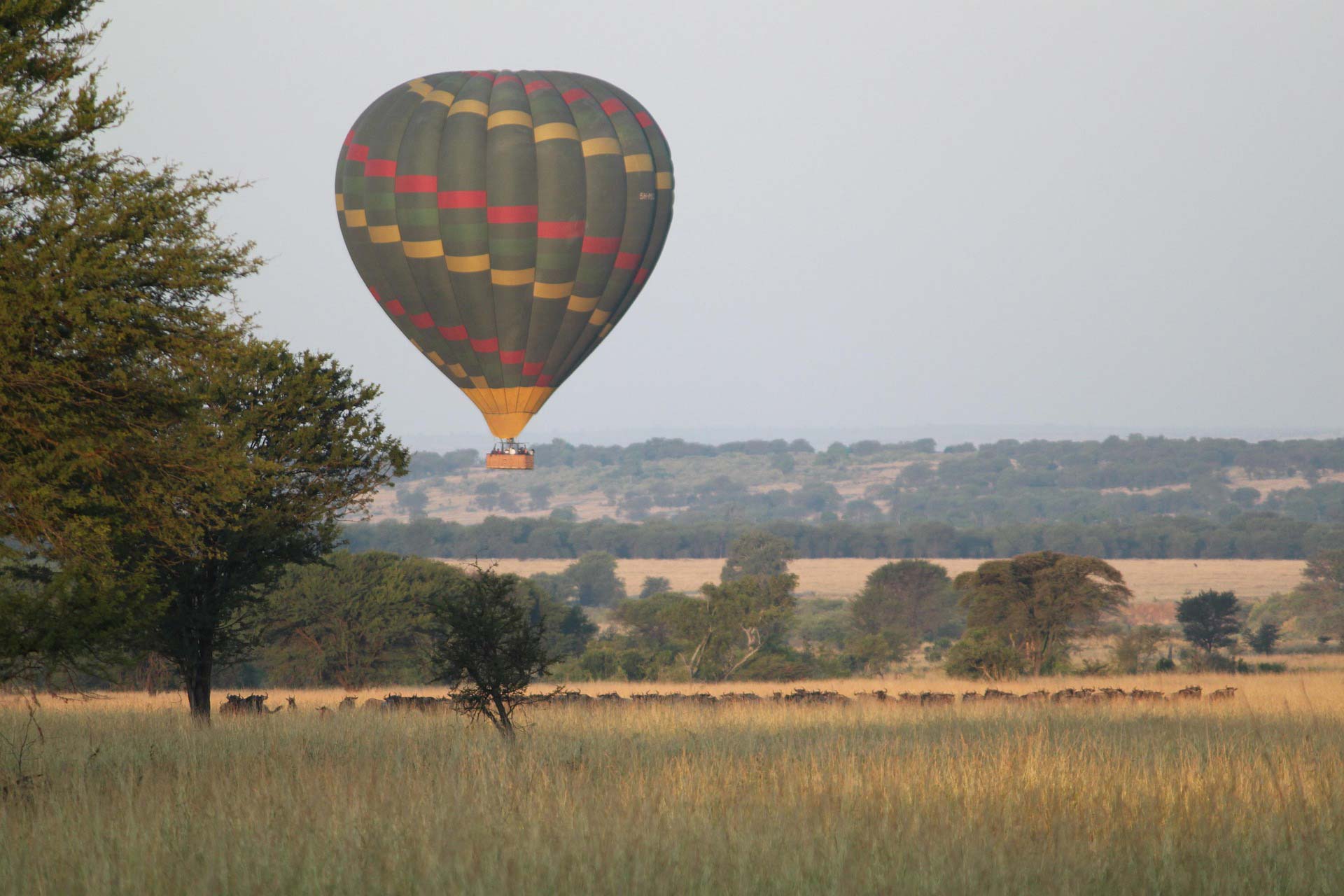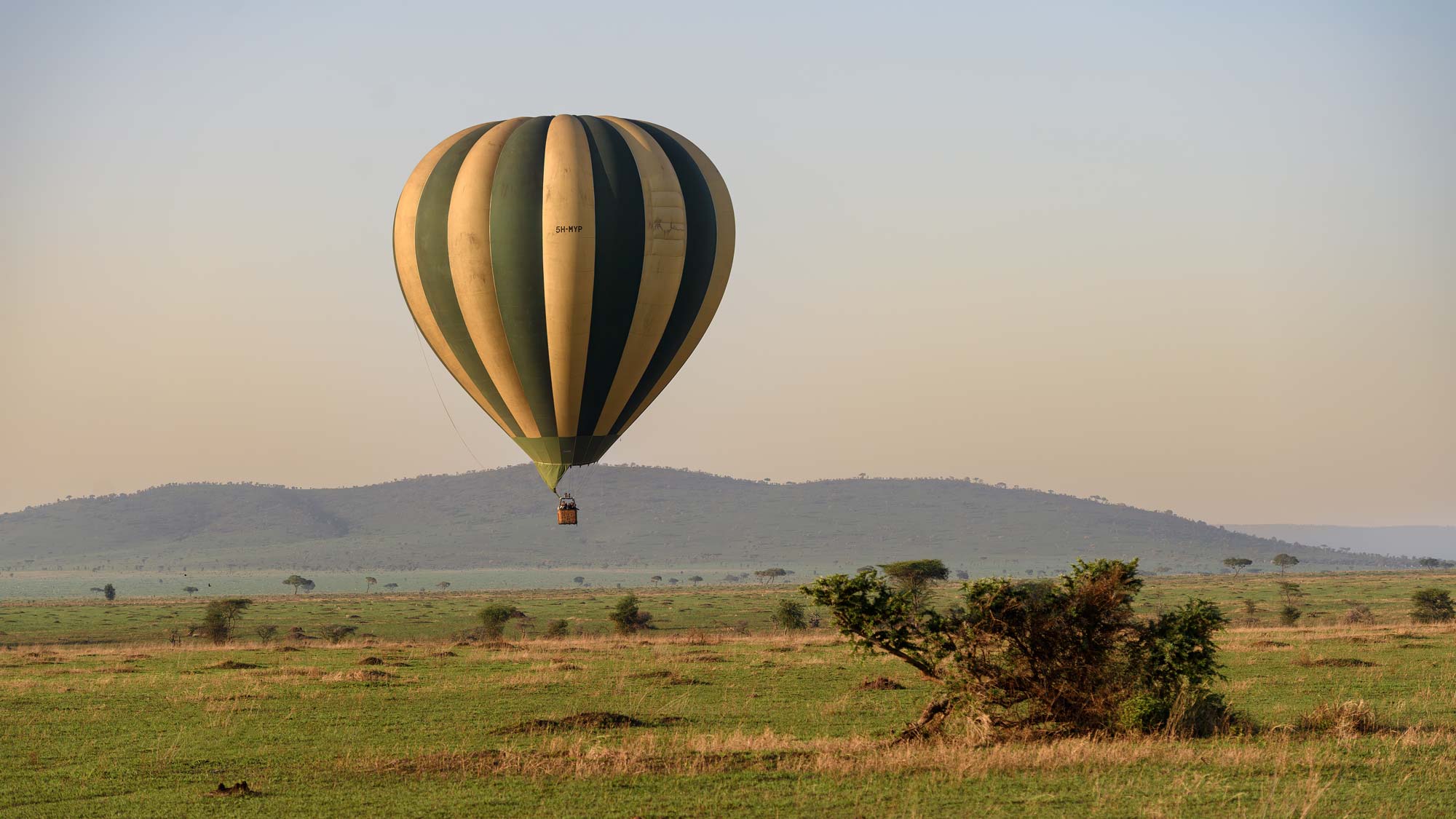
- See the Serengeti from the Sky
Balloon Safari Experience
Safari Overview
A hot air balloon safari gives you a view no jeep can match. You float above the Serengeti plains at sunrise, watch wildlife move below you, and see the landscape stretch to the horizon in every direction. This is one of the top bucket list experiences in East Africa.
What a Balloon Safari Involves
Your day starts before dawn. A guide picks you up from your camp or lodge around 5:30 AM and drives you to the launch site. You watch the crew inflate the balloon, then climb into the basket as the sun starts to rise. The flight lasts about one hour and covers 15 to 20 kilometers, depending on wind conditions.
The pilot controls altitude, not direction. Wind carries the balloon, so your route changes every flight. Sometimes you glide low over rivers and watch hippos surface. Other times you rise high enough to see the full curve of the plains.
Where to Fly in Tanzania
Serengeti National Park is the main location for balloon safaris in Tanzania. The central Serengeti and the area near the Grumeti River offer the best wildlife density. If you visit during the Great Migration, between July and October, you have a strong chance of seeing herds of wildebeest and zebra from above.
Tarangire National Park also runs balloon flights, though on a smaller scale. It suits travelers who want a quieter experience with fewer balloons in the sky at once.
What You Might See
Wildlife sightings depend on the season and the flight path, but common sightings include:
- Elephant herds moving across open grassland
- Giraffes browsing acacia trees
- Lions resting near kopjes
- Hippos in rivers and watering holes
- Large herds of wildebeest and zebra during migration months
- Various birds, including vultures and eagles riding the same air currents as your balloon
You get a different perspective on animal behavior from the air. Herd movement patterns and territory boundaries become clear in a way ground safaris don’t show.
Best Time to Book

The Great Migration season, July through October, gives you the highest chance of large scale wildlife sightings. Balloon safaris also run well during the calving season, January through March, when you see newborn wildebeest and their predators nearby.
Weather affects flights year-round. Flights happen only in calm morning conditions, so operators may reschedule if wind speeds are too high.
What’s Included
Most Tanzania balloon safari packages include:
- Hotel or camp pickup and drop-off
- The one hour flight
- A champagne breakfast after landing, often set up in the bush
- A flight certificate
- Transfer back to your lodge or onward to your next activity
Prices typically range from $550 to $700 per person, depending on the operator and season. Confirm what’s included before booking, since some companies charge extra for breakfast or transfers.
Balloon Safari vs. Game Drive: Key Differences
Visitors often ask if a balloon flight replaces a game drive. It doesn’t. The two activities serve different purposes.
- Game drives let you get close to individual animals and observe behavior for extended periods.
- Balloon safaris show you scale: herd size, migration patterns, river systems, and terrain that a ground vehicle can’t reveal.
- Game drives run multiple times a day. Balloon flights run once, at dawn only.
- Balloon safaris cost significantly more per hour than a standard game drive.
Top Balloon Safari Operators in Tanzania
A few licensed operators run the majority of flights in the Serengeti and Tarangire:
- Serengeti Balloon Safaris: The longest running operator in the region, with daily flights from multiple camps.
- Miracle Experience: Operates in the central and northern Serengeti, known for smaller group sizes.
- Balloon Safaris Tanzania: Offers flights paired with extended bush breakfast setups.
Each operator uses similar pricing and flight structure. The main differences come down to launch location, basket capacity, and pickup logistics from your specific camp.
Cost Breakdown
A typical package runs between $550 and $700 per person. Here’s what drives the price difference:
- Season: Peak migration months (July to October) carry higher rates.
- Basket size: Standard baskets hold 12 to 16 passengers. Private or smaller baskets cost more.
- Camp location: Camps farther from the launch site add transfer time and sometimes transfer fees.
- Inclusions: Some packages bundle park fees and transfers. Others charge these separately.
Photography Tips for Your Flight
The light at sunrise in the Serengeti gives you strong photo opportunities. A few practical tips:
- Use a fast shutter speed. Basket movement and wind create shake, especially with zoom lenses.
- Bring a wide angle lens for landscape shots and a zoom lens for wildlife close-ups.
- Keep your camera strap around your neck. Baskets shift during landing.
- Shoot in the first 20 minutes after takeoff for the softest light.
- Protect your gear from dust during the pre-dawn drive to the launch site.
Safety and What to Expect

Balloon safaris in Tanzania operate under strict licensing and inspection standards. Pilots need extensive flight hours and certification before they can fly commercial balloons. Landings can be firm depending on wind, so listen to your pilot’s brace instructions during descent.
Children under a certain age or height may not be allowed on some flights. Check the operator’s policy before you book if you’re traveling with kids.

Best Time for a Tanzania Balloon Safari
July to October: Great Migration Season
This is the peak season for balloon safaris. Large herds of wildebeest and zebra cross the northern Serengeti and the Mara River during these months. From the air, you see herds stretching across the plains in lines that run for kilometers.
- Best sightings: River crossings, large herd movement, predators tracking the herds
- Best launch location: Northern Serengeti, near Kogatende
- Weather: Dry and clear, low chance of flight cancellation
- Booking window: Reserve 2 to 3 months ahead. This season sells out fast
January to March: Calving Season
Over 500,000 wildebeest calves are born in the southern Serengeti during this window. Predators follow closely, so you often spot lions and cheetahs near the herds. The grass is short after the dry season, which makes animals easier to spot from altitude.
- Best sightings: Newborn wildebeest, concentrated predator activity
- Best launch location: Southern Serengeti, near Ndutu
- Weather: Warm with short rain showers, mostly clear mornings
- Booking window: Reserve 4 to 6 weeks ahead
April to May: Green Season
This is the low season for tourism, which means fewer balloons in the sky and lower prices. Rain is heavier during these months, so flight cancellations happen more often. The landscape turns green and lush, which photographs well.
- Best sightings: Fewer large herds, more resident wildlife like elephants and giraffes
- Best launch location: Central Serengeti
- Weather: Heavier rain, higher cancellation risk
- Booking window: Reserve 1 to 2 weeks ahead. Availability stays open
June and November to December: Transition Months
These months sit between major migration events. Wildlife spreads out across the park, so sightings are less concentrated but still consistent. Prices sit lower than peak season, and crowds thin out.
- Best sightings: Resident wildlife, scattered herds moving toward or away from migration routes
- Best launch location: Central Serengeti
- Weather: Mostly dry and stable
- Booking window: Reserve 3 to 4 weeks ahead
Start Planning Your Dream Trip with Us!
- Faq's
Everything You Need to Know About Your Safari
How early do I need to wake up?
Pickup happens around 5:30 AM. Confirm the exact time with your camp the night before.
Is the flight safe for children?
Age and height restrictions vary by operator. Most require children to reach a minimum height for safety in the basket.
What should I wear?
Dress in layers. Early mornings run cold, but temperatures rise fast once the sun comes up.
Do I need travel insurance for this activity?
Confirm your travel insurance covers hot air balloon flights before you book. Some policies exclude adventure activities by default.
Can I bring my phone or camera?
Yes. Secure loose items in a zipped pocket or bag. Baskets shift during landing.