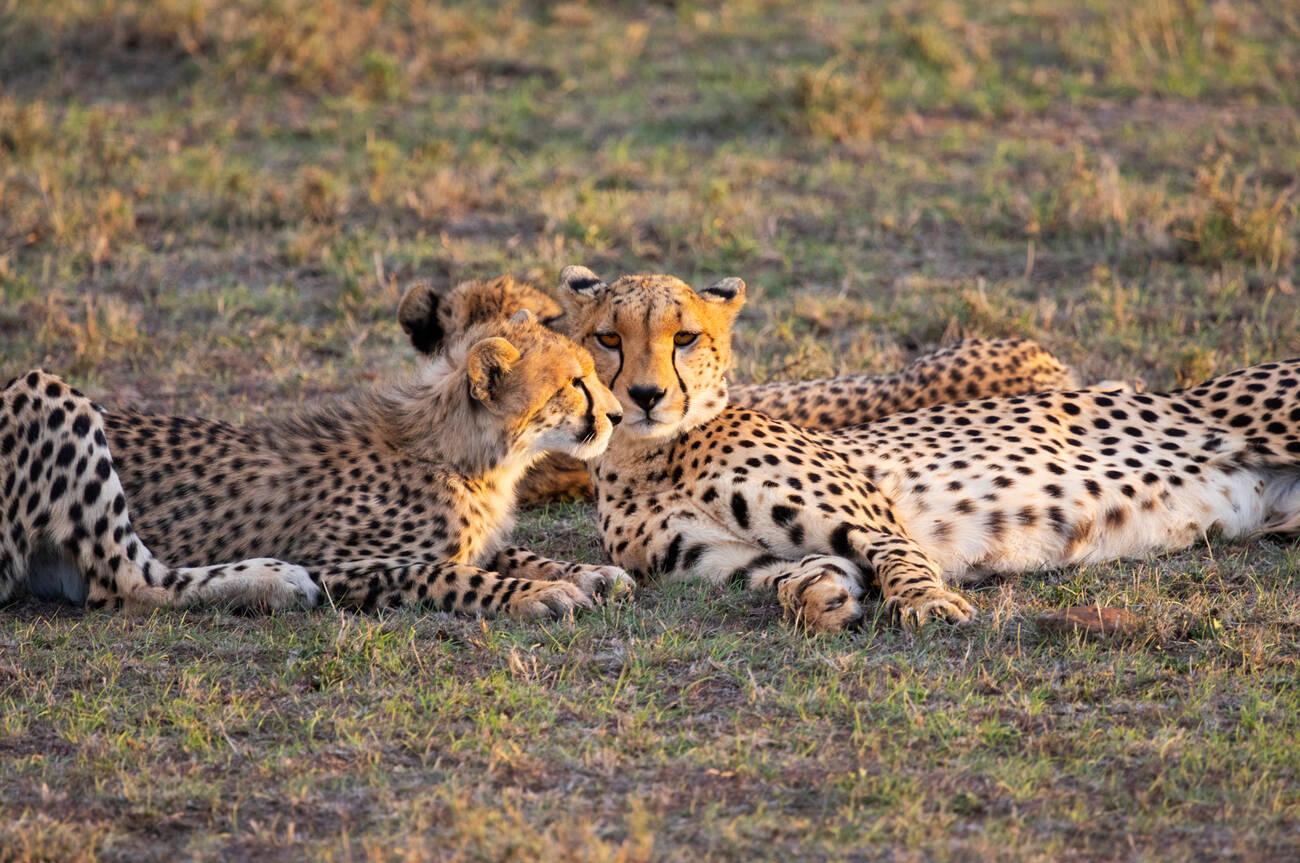
SERENGETI NATIONAL PARK

Experience endless golden plains, breathtaking wildlife, and unforgettable moments in the heart of Tanzania.

Serengeti Overview

Serengeti National Park is one of Africa’s most famous protected areas and one of the world’s greatest wildlife destinations. It is located in northern Tanzania, within a larger ecosystem that extends toward Kenya’s Maasai Mara National Reserve. The national park covers approximately 14,750 square kilometers (5,700 square miles), while the wider Serengeti ecosystem is considerably larger and includes several conservation areas, wildlife reserves, and community lands.

The park is internationally recognized for its enormous wildlife populations, open savannahs, dramatic landscapes, and the spectacular Great Migration. Each year, more than 1.5 million wildebeest, together with hundreds of thousands of zebras and gazelles, move across the ecosystem in search of fresh grass and water. This continuous movement supports one of the most complex and impressive natural systems on Earth.


The name “Serengeti” comes from the Maasai word “Siringet,” meaning “the endless plains.” The name describes the park’s broad grasslands, where the horizon often appears to stretch without limit. Serengeti National Park was established in 1951 and is Tanzania’s oldest national park. It forms an important part of the country’s conservation network and plays a major role in protecting wildlife, supporting scientific research, and promoting responsible tourism.

Location and Surrounding Conservation Areas
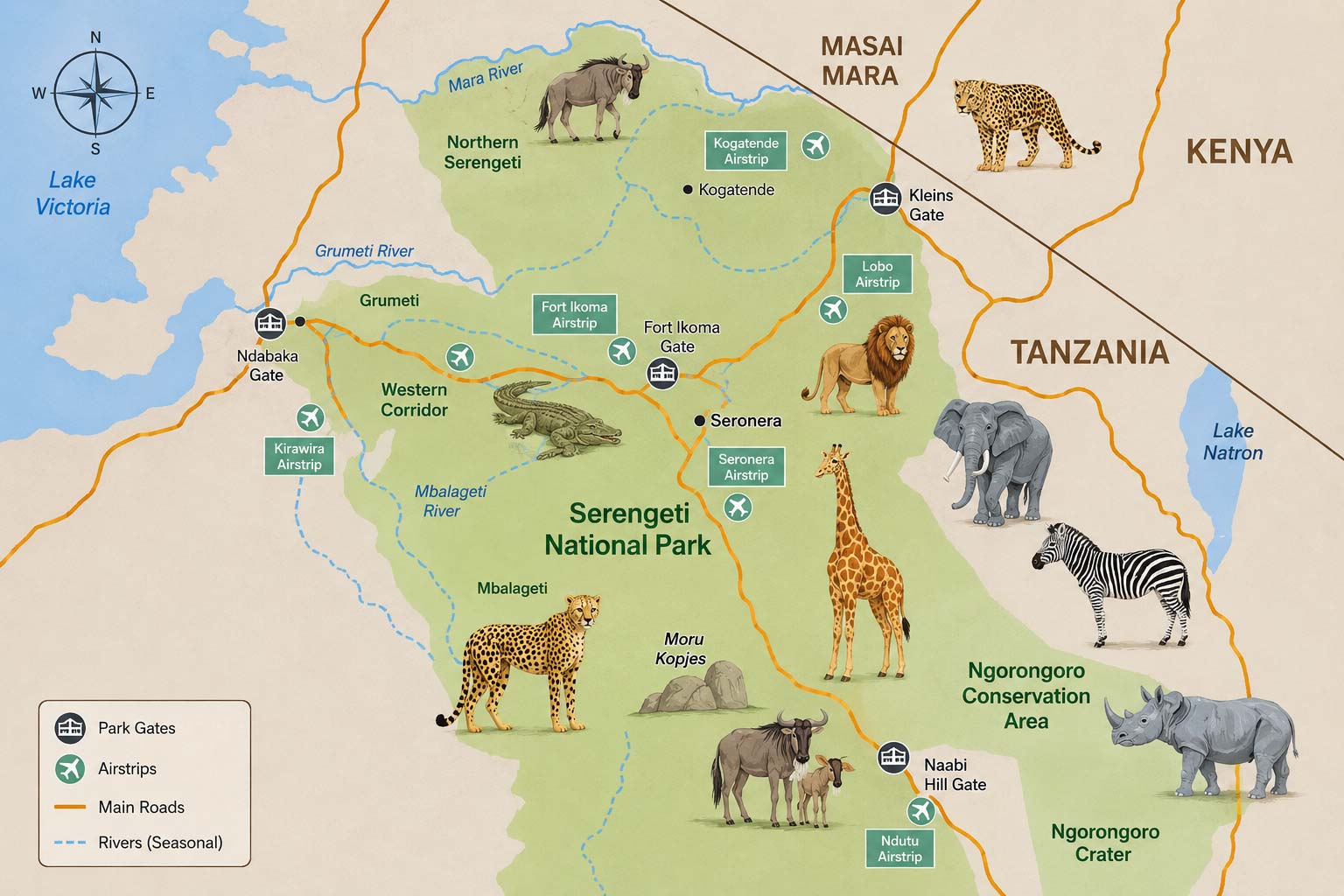
Serengeti National Park lies in the northern part of Tanzania, west of the Ngorongoro Conservation Area and south of Kenya’s Maasai Mara. Its location connects several important wildlife habitats, allowing animals to move naturally across large areas in response to rainfall, food availability, and seasonal changes.

The wider Serengeti ecosystem includes:

  • Serengeti National Park.
  • Ngorongoro Conservation Area.
  • Maswa Game Reserve.
  • Grumeti and Ikorongo Game Reserves.
  • Loliondo Game Controlled Area.
  • Kenya’s Maasai Mara National Reserve.

This connected landscape is essential for migratory animals because it provides grazing areas, water sources, breeding grounds, and safe routes between seasonal habitats. The survival of the Great Migration depends on maintaining these connections and reducing barriers to animal movement.

Diverse Landscapes and Ecosystems

The Serengeti is not a single uniform landscape. It contains a variety of habitats, each supporting different plants and animals. These habitats change in appearance according to rainfall, soil type, elevation, and seasonal water availability.

Important landscapes include:

  • Short grass plains: Found mainly in the southern Serengeti, these nutrient-rich grasslands are especially important during the wildebeest calving season.
  • Long grass plains: These areas provide food and shelter for herbivores during wetter periods.
  • Acacia woodlands: Scattered trees offer shade and food for giraffes, elephants, birds, and many smaller animals.
  • Riverine fo  rests: Vegetation along rivers provides water, nesting sites, and refuge for wildlife during dry periods.
  • Kopjes: These ancient granite rock formations rise above the plains and serve as lookout points, resting places, and shelters for lions, leopards, hyraxes, reptiles, and birds.
  • Seasonal wetlands: Temporary pools and marshes attract hippos, waterbirds, amphibians, and other species.
  • Permanent rivers: Rivers such as the Grumeti and Mara provide essential water during the dry season and support crocodiles, hippos, fish, and dense vegetation.

The combination of these habitats allows the Serengeti to support wildlife throughout the year, even when conditions change from one region to another.

Climate and Weather

The Serengeti has a tropical savannah climate with distinct wet and dry periods. Temperatures are generally moderate because of the park’s elevation, although conditions vary between day and night.

The main weather patterns include:

  • Long rains: Usually occur from March to May and transform the plains into green, flowering grasslands.
  • Dry season: Generally lasts from June to October. Water becomes scarce, causing animals to gather around rivers, springs, and permanent waterholes.
  • Short rains: Usually occur from November to December and encourage the growth of fresh grass.
  • Calving period: Often takes place from January to March in the southern plains, when nutritious grass supports pregnant females and newborn calves.

Exceptional Wildlife

Serengeti National Park is home to one of the highest concentrations of wildlife in Africa. Its open terrain makes it possible to observe animals from a distance, while the variety of habitats supports both large mammals and smaller species.

Visitors have excellent opportunities to encounter the famous Big Five:

  • Lion
  • Leopard
  • African elephant
  • African buffalo
  • Black rhinoceros

The Serengeti is particularly well known for its large lion population. Lions often rest on kopjes, under trees, or in tall grass during the heat of the day before becoming active in the evening and early morning.

Other commonly seen mammals include:

  • Cheetahs
  • Spotted hyenas
  • African wild dogs, although sightings are uncommon
  • Giraffes
  • Hippopotamuses
  • Nile crocodiles
  • Elands
  • Topis
  • Hartebeests
  • Impalas
  • Grant’s gazelles

The Great Migration

The Great Migration is the Serengeti’s most famous natural event. It is not a single journey that begins and ends on fixed dates, but a continuous annual cycle influenced by rainfall, grass growth, water availability, and animal behavior.

The migration generally follows this pattern:

Southern Plains and Calving Season

From approximately January to March, large herds gather in the southern Serengeti and nearby Ngorongoro areas. The short grass is rich in minerals and nutrients, making it ideal for pregnant wildebeest and nursing mothers.

During the calving season, hundreds of thousands of wildebeest calves may be born within a short period. Newborn calves can stand and walk soon after birth, which is essential because predators are constantly nearby. Lions, cheetahs, hyenas, jackals, and vultures take advantage of the large number of vulnerable young animals.

Movement Toward the Western Corridor

As the southern grasslands become drier, the herds begin moving westward. They pass through areas of longer grass, woodlands, and river systems. This stage of the migration can be difficult because animals must cross areas where predators are active and water may be limited.

The Grumeti River is one of the important obstacles along this route. Large crocodiles may gather near crossing points, while lions and hyenas wait nearby for opportunities to hunt.

Northern Serengeti and River Crossings

Later in the year, many herds move north toward the Mara River and the Kenya-Tanzania border. River crossings are among the most dramatic moments of the migration. Thousands of animals may gather along the riverbank before suddenly entering the water.

Return to the South

After spending time in the northern Serengeti and Maasai Mara, the herds gradually move south as rainfall returns to the southern plains. The cycle begins again, demonstrating the close relationship between climate, vegetation, and animal movement.

Zebras and gazelles travel with the wildebeest but do not always follow exactly the same routes. Zebras often feed on taller grass, while wildebeest prefer shorter grass. This difference allows several herbivore species to use the same landscape without competing for exactly the same food.

Water Sources and Dry Season Survival

The Great Migration is the Serengeti’s most famous natural event. It is not a single journey that begins and ends on fixed dates, but a continuous annual cycle influenced by rainfall, grass growth, water availability, and animal behavior.

The migration generally follows this pattern:

Southern Plains and Calving Season

From approximately January to March, large herds gather in the southern Serengeti and nearby Ngorongoro areas. The short grass is rich in minerals and nutrients, making it ideal for pregnant wildebeest and nursing mothers.

During the calving season, hundreds of thousands of wildebeest calves may be born within a short period. Newborn calves can stand and walk soon after birth, which is essential because predators are constantly nearby. Lions, cheetahs, hyenas, jackals, and vultures take advantage of the large number of vulnerable young animals.

Movement Toward the Western Corridor

As the southern grasslands become drier, the herds begin moving westward. They pass through areas of longer grass, woodlands, and river systems. This stage of the migration can be difficult because animals must cross areas where predators are active and water may be limited.

The Grumeti River is one of the important obstacles along this route. Large crocodiles may gather near crossing points, while lions and hyenas wait nearby for opportunities to hunt.

Northern Serengeti and River Crossings

Later in the year, many herds move north toward the Mara River and the Kenya-Tanzania border. River crossings are among the most dramatic moments of the migration. Thousands of animals may gather along the riverbank before suddenly entering the water.

The crossings are dangerous

Visitor Experiences

Serengeti National Park offers a wide range of experiences for travelers interested in wildlife, landscapes, photography, and culture.

Popular activities include:

  • Morning game drives.
  • Afternoon and evening game drives in permitted areas.
  • Full-day wildlife safaris.
  • Hot-air balloon safaris.
  • Guided walking experiences in designated areas.
  • Wildlife photography tours.
  • Birdwatching excursions.
  • Cultural visits to Maasai communities outside the national park.
  • Scenic viewing from kopjes and elevated landscapes.
  • Luxury tented camps and permanent lodges.
  • Family-friendly educational safari programs.

Game drives are the most common way to explore the park. Early morning drives are especially rewarding because animals are active in the cooler temperatures and the light is ideal for photography. Afternoon drives often provide opportunities to observe predators preparing for evening activity.

Best Time to Visit Serengeti National Park

Serengeti National Park offers a wide range of experiences for travelers interested in wildlife, landscapes, photography, and culture.

Popular activities include:

  • Morning game drives.
  • Afternoon and evening game drives in permitted areas.
  • Full day wildlife safaris.
  • Hot-air balloon safaris.
  • Guided walking experiences in designated areas.
  • Wildlife photography tours.
  • Birdwatching excursions.
  • Cultural visits to Maasai communities outside the national park.
  • Scenic viewing from kopjes and elevated landscapes.
  • Luxury tented camps and permanent lodges.
  • Family-friendly educational safari programs.

Game drives are the most common way to explore the park. Early morning drives are especially rewarding because animals are active in the cooler temperatures and the light is ideal for photography. Afternoon drives often provide opportunities to observe predators preparing for evening activity.

Safety Guidelines

Serengeti National Park offers a wide range of experiences for travelers interested in wildlife, landscapes, photography, and culture.

Popular activities include:

  • Morning game drives.
  • Afternoon and evening game drives in permitted areas.
  • Full day wildlife safaris.
  • Hot-air balloon safaris.
  • Guided walking experiences in designated areas.
  • Wildlife photography tours.
  • Birdwatching excursions.
  • Cultural visits to Maasai communities outside the national park.
  • Scenic viewing from kopjes and elevated landscapes.
  • Luxury tented camps and permanent lodges.
  • Family-friendly educational safari programs.

Game drives are the most common way to explore the park. Early morning drives are especially rewarding because animals are active in the cooler temperatures and the light is ideal for photography. Afternoon drives often provide opportunities to observe predators preparing for evening activity.

Interesting Facts about Serengeti National Park

  • The Serengeti is Tanzania’s oldest national park.
  • The park covers approximately 14,750 square kilometers.
  • The name Serengeti means “the endless plains.”
  • The ecosystem supports more than 70 species of large mammals.
  • More than 500 bird species have been recorded in the region.
  • The Great Migration is driven mainly by rainfall and grass growth.
  • Wildebeest calves can stand and walk shortly after birth.
  • Kopjes provide important shelter and lookout points for wildlife.
  • The Serengeti is home to large populations of lions, cheetahs, elephants, giraffes, and hyenas.
  • The park forms part of a larger ecosystem that extends into Kenya.
  • Natural fires help renew grasslands and recycle nutrients.
  • Rivers and waterholes become especially important during the dry season.

Start Planning Your Dream Trip with Us!

Booking form

Everything You Need to Know About Your Safari

Planning Your Safari? Find Your Answers Here

Start Planning Your Dream Trip with Us!

Where is Serengeti National Park located?

Serengeti National Park is located in northern Tanzania and forms part of the larger Serengeti ecosystem, which extends into Kenya’s Maasai Mara National Reserve. The park is approximately 325 kilometers (202 miles) from Arusha and is accessible by both road and domestic flights.

Serengeti National Park is best known for the Great Migration, one of the world’s most spectacular wildlife events. Every year, over 1.5 million wildebeest, along with hundreds of thousands of zebras and gazelles, migrate across the Serengeti in search of fresh grazing, attracting predators such as lions, cheetahs, and crocodiles.

The Serengeti is a year round safari destination. January to March is ideal for the wildebeest calving season, while June to October offers excellent wildlife viewing during the dry season. August to October is particularly popular for witnessing the dramatic Mara River crossings in the northern Serengeti.

Serengeti National Park is home to the Big Five lion, leopard, elephant, buffalo, and black rhinoceros as well as cheetahs, giraffes, hippos, crocodiles, hyenas, wildebeest, zebras, gazelles, and more than 500 bird species, making it one of Africa’s richest wildlife destinations.

A stay of 3 to 5 days is recommended to fully experience the park’s diverse landscapes and wildlife. Travelers interested in following the Great Migration or exploring different regions of the park may prefer spending 5 to 7 days for a more comprehensive safari experience.